The Loss of Wetlands You Haven't Heard Of - The Ojibwe Perspective


This article touches on similar subjects to Water For Generations - Ojibwe Traditions and Resisting Drought. For an expanded discussion on the Ojibwe perspectives on water, follow the link.
The Loss of Wetlands You Haven't Heard Of - The Ojibwe Perspective
Finn Rachul - October 11, 2025.
Driving through the local landscape on the back roads with a oral historian and traditional Ojibwe man is an eye opening experience. Living in the "Tiger Hills", as the rough translation goes for the hilly terrain around Swan Lake, Notre Dame de Lourdes, Holland, and Treherne, I've always wondered what this landscape was once like.
What the Land Once Was
The Ojibwe of Manitoba were once a forest dwelling people of western Ontario, having moved here under treaty with the Cree in an effort to push back surrounding warlike and expansionist societies and tribes. Living on the grasslands and forest bluffs of the Prairies required being taught by the Cree, who gave the Ojibwe the teepees and showed them how to thrive on their new landscape. Societies of the Ojibwe did make their home in the flat grasslands in the areas east of the Escarpment, but many stayed in the forested hills of where I live today. Others settled in permanent dwellings in the well-sheltered Assiniboine valley, gardening native species using their traditional knowledge in ways that are similar to permaculture today. In fact, some of those native species still grow in those locations, which is why people occasionally stumble on areas particularly dense in edible plants today.
The forested "Tiger Hills" were once an area of old growth forests, dotted by grasslands and sheltering large wetlands spanning miles in the valleys created by the undulated elevation. These wetlands seeped into large underground reservoirs of water, many of which drained into the lakes within the Pembina Valley or fed springs trickling out of the Escarpment. These wetlands were a major source of food for the Ojibwe, who hunted water animals such as muskrats, beavers, and waterfowl, stored fish for catching over winter, gathered plants such as the native cattail and rat root, and used them as clean sources of drinking water. Back then, these waterways were far cleaner than now, and beaver fever had not yet arrived.
A key part of maintaining the health of these wetlands and waterways was managing the hilltop forests. As the Ojibwe knew well, healthy forested hilltops protect and filter rainwater, allowing it to trickle either overground or underground into low-lying areas. Likewise, large trees provided strong weather shelters for encampments and contributed to creating consistent rains. Each and every valley was managed for a purpose. Dave frequently points out these areas, such as the valley between Swan Lake and Somerset being a storm shelter, or the now broken-up marsh that runs through Swan Lake First Nation being a key hunting ground and landscape feature.
Beavers played an important role in this. In oral history, beavers were plenty and occupied everywhere they could, leading to dams being built, with a guiding hand from Ojibwe land users, even near hilltops where the ecosystem allowed. It's incredible to imagine the massive amount of water that was captured and trickled from high to low areas when this was the case, not to mention the diverse and plentiful ecosystems and bountiful quantity of animals and plants that would have been used by the Ojibwe.
The Ojibwe saw themselves in a land manager role - just like the beaver creates its own niches that benefit many species, human beings played a larger role in managing the plants and animals of the entire landscape. A central rule of Ojibwe culture is to create a healthy and bountiful landscape for the next generations. For a people that rely on all the species that live on the land, the hills, forests, grassland, and waterways of Manitoba were their gardens. As we have written about before, this kind of land management, all the way across the continent before the destabilization of the fur trade and colonization, radically changed the topography enough to have influence on weather.
The Loss of A Healthy Landscape
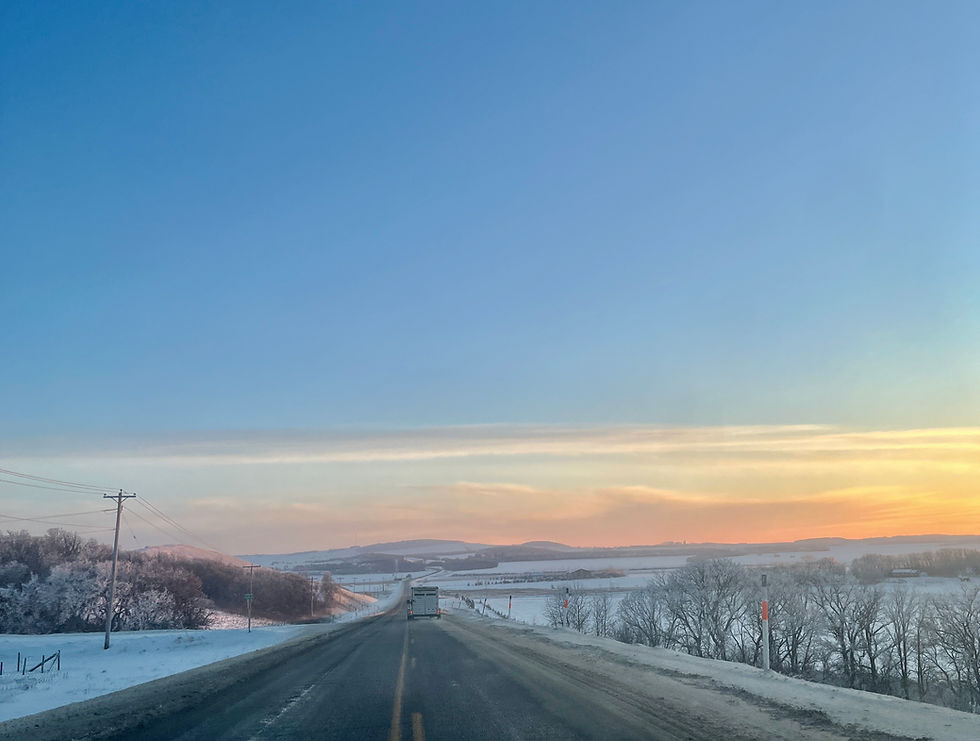
Today, as Dave and I drive through the landscape on a daily basis, Dave highlights how dramatically different our ecosystems have become. The valley in the photo above, a couple miles south of Holland on Highway 34, as is part of traditional oral history, is unrecognizable to what it once was. As Dave tells me from his grandfather's stories, there was once a wetland there that spanned miles in length, full of a diverse range of plants and wildlife that fed the Ojibwe people. Today, it holds a small amount of water for a month or two in spring, containing a handful of disturbance-loving wetland plants.
This situation is not isolated. An estimated 70% of Canada's wetlands have been lost in settled areas, and this is clearly illustrated by what we see on the land in our day to day work. The traditional people of the reserve who watched the grid road system be put in place many years ago talked about how this would change the landscape. The once formidable marsh that runs through the reserve here - referred to as "tottoganning" in Ojibwe - is cut into sections by many of these roads, and is of minimal use to traditional land users.
For marshes like these, the grid road system either drains or blocks runoff before it gets the chance to settle, massively shrinking the size of water ecosystems.

Likewise, the waterway this wetland trickles into, Swan Lake and the Pembina Valley, are in a seriously deteriorated condition. Much of the lake is subject to algae blooms that arrive earlier every year due to large amounts of nutrient runoff from surrounding areas, reaching toxic levels in much of the lake by late July. It is becoming shallower, due to increased amounts of silt having clogged the channel that was once in the middle of the lake, and hotter, due to higher summer temperatures, less water coverage by plants, less water recharge, and the silt built-up. These conditions created a bloom in aquatic parasites that infect various species. This has resulted in rotten fish floating to the surface, such as the large, bloated jackfish we found this year during the our environmental program.
Across the province, hybrid narrowleaf cattail have pushed out the native broadleaf cattail. While still containing a starchy root, the narrowleaf cattail does not have the nutritious bulb that the wildlife and Ojibwe people would have used. Instead, being a habitat generalist, it clogs shallow marshes with fast-spreading vegetation, pushes out useful aquatic plants, and takes away habitat for birds like the mud hen that used to live on the floating cattail islands along the Swan Lake shoreline. As this process has continued without any management, the cattail line in Swan Lake is continuously expanding further and further to the center.

In the surrounding forests is a similar situation. A lack of management has led to a serious build up in dead material and a loss of several key plant species. With the loss of flowers and edible plants, insect populations become smaller and less diverse. Insect-hunting birds, such as various songbirds, will then look elsewhere for their food. With these key birds and predator bugs disappearing from our area, we lose them as population controls on potentially detrimental species like ants. As we have talked about before, the ant population, along with their associated mushroom planting, has exploded. All the dead and decaying plant material that traditionally would have been burnt in controlled fires is creating uncontrolled fungi blooms. As forests become sicker due to harsher and drier weather conditions, their immune systems against mushrooms and ants are compromised, and we frequently see whole forests scarred by their impacts.
From a traditional perspective, Swan Lake and its surrounding areas are dead, unusable for fishing or gathering in any way. This has compounded food insecurity for a people that once lived off the land. Likewise, there is a lot of concern for much of the local lakes, many of the pothole lakes and marshes, and the Assiniboine and Pembina Rivers as well. These waterways are becoming very dry compared to even my memory of living in this area. In fact, we learned that the aquifer the reserve is on top of recharged only 60% last year.
The Bigger Picture
With the loss of natural water capturing systems, situations like this are created. Many hilltops around here are not forested anymore and many of the wetlands are drained or becoming shallower. This is compounded by the way we use our land resulting in rapid drainage of the spring snowmelt, sending it flying down the water system far from where it started. Without the chance to trickle slowly though wetlands and creeks into lakes or underground, groundwater barely has a chance to recharge. With that, springs slow their flow into valleys and wells have to be drilled deeper. Rapid drainage problems are added to by removal of vegetation that shields from wind and heat evaporation. During the Dust Bowl era, trees were planted to slow the unchecked winds that removed topsoil and dried up the ground. The fewer trees we have and the smaller our wetlands, the closer we get to desertification. For an landscape already on the drier side, the topography of the Prairies is becoming more and more vulnerable to drought every year.
Compared to where the Ojibwe came from in the lake and forest lands of western Ontario, the Prairies are a much drier landscape. In their former home, the Manitoba Ojibwe protected water as a central part of their culture, bringing that with them when they moved and conserving and increasing water every way they could. On the wide grasslands such as the one below the Escarpment, the small, well-treed creeks that once snaked through the landscape were places for encampment and provided water, food, plants, and shelter. These places were where the Ojibwe Grassdance society had many of their gardens. Water was not looked at as separated from the landscape. If it was there, it was necessary, and it would be maintained as a healthy ecosystem along with every other place the Ojibwe looked after. Water was understood as necessary for all life, as opposed to being used as a commodity as we do today, and was slowed, captured, increased, and filtered in many different ways.
There were many tools by which the Ojibwe maintained water on the land. Dave's beaver project is one such tool for restoring dry areas as the Ojibwe once would have done. His efforts have created one of the few sanctuaries in our area in Prince's creek valley (Indian Springs), which drains through the reserve and into Swan Lake. Here, Dave has introduced 12 beaver colonies over 27 years using knowledge the Ojibwe have passed down for thousand of years, moving them from other areas, giving them guidance on where to build their dams using willow trickle structures, and managed by hunters under Dave's watch. This is one of very few areas where I've seen high concentrations of fish fry and other aquatic plant and animal species, much of which I have never found in a creek valley on the Prairies. The beavers have continued to expand, with 9 massive dams holding back large amounts of clean, filtrated water that drains into Swan Lake.
As the situation is with climate change continuing to bring hotter and more erratic weather, what we do with the land has increasingly large affects on not only people who live off the land, but everyone as a whole. We have written about this before, how healthy forests have an affect on slowly releasing moisture into the air and creating rain. The images below from a quick google search illustrates what we've see in the field constantly. After a rain, the moisture that hits the ground will slowly evaporate into the air and form clouds such as the image on the left. Trees will slow this process down, typically allowing water to infiltrate into the groundwater and then slowly bringing it back up into their leaves as needed. This water stored in plant matter is then released back into the air at a much slower rate than if it hits bare soil, either evaporating or being rapidly flushed off the landscape. Likewise, standing water, as in the photo on the right, constantly evaporates. Over a wide prairie of pothole lakes and marshes, this can make a significant impact.

Solving Problems On the Land
How we have altered the landscape today, in Ojibwe culture, has a significant impact. When you alter the course of water, you alter plant and animal life that in turn impacts how water becomes the weather we all rely on. No matter how removed from nature we live, we still rely on its processes for our way of life as a whole.
We live in times of heightened tensions between communities, whether it be political, religious, or race-based. Most people, to some extent, know and see the weather is changing and becoming more extreme. These are intimidating times to grow into as a young person, realizing the world and environment that we are finding our way in is changing rapidly and will get worse. As Dave teaches me, within every Ojibwe story and understanding of environmental phenomena like these, there are solutions. History has brought our communities apart and has made this world we live in, creating a situation where we do not look at one another as human beings first and isolating us in key times like these. We can't solve issues on the land if we aren't talking to one another.
The environment is a neutral space that affects us all. Much of Dave and my work has been to facilitate that connection, teaching the traditional Ojibwe perspective on the land and bringing young adults of diverse communities together in a space that gives the opportunity for them to be friends and get to know each other. We spend the summer learning from one another as we are taught Dave, laughing all the way. Likewise, we have many partners who recognize the importance of these connections. People like Katie and Colin McInnes, from the Dogs Run Farm, who have taught us about regenerative agriculture, or Jolene Gardiner, an expert in permaculture from the community of Clearwater, have built relationships with us and their communities. Others, like Will Braun from Morden or Reid Bouvier from Hanover School Division, are trying to bring oral histories and rebuild relationships in their own areas. As Dave sees it, this is how the relationship between Indigenous and non-Indigenous peoples should have been. He believes this is what the Ojibwe intended treaty to be.
This is the meaning of "ogohbizohwin", the old Ojibwe word for "treaty". Within this word with big meanings is the reciprocal relationship between peoples, supporting, teaching, and treating one another as family. It is closely tied to familial responsibility in Ojibwe culture, which entails caring for the land we live on so that future generations thrive. Likewise, it is central to "ogohbizohwin" to look at one another as human beings first.
Traditional Indigenous peoples have so much to teach when it comes to the environmental issues we face, and likewise we have much to learn from each other's unique communities and perspectives. We can't learn that if we look at each other as anything other than just human beings.

Closing
The Ojibwe people have survived on this land we know as North America for thousands of years, always teaching their values of living on the land as part of the environment, helping it thrive for future generations, and trying to create relationships to live alongside the newcomers. Even though this way of life and the landscape it thrived on are gone, we are still just as reliant on the health of the environment as the Ojibwe were. In the face of a the environment deteriorating and our communities growing further apart, there is lots of work to do. We all have a role to play, whether it is restoring wetlands, aiding in the health of forests, or talking to the community next door and learning from each other.
There is still so much to learn from the traditional people still left, but one message from them stands clear: look at one another as human beings first, learn from your environment and be part of it, and create a healthy world for the coming generations.


Comments