The Six Seasons of Ojibwe Life


The Six Seasons of Ojibwe Life
March 15, 2026
David Scott and Finn Rachul
The way we track time can radically change how we relate to the world. Today, the calendar is linear - it begins in January and ends in December, with 4 seasons clearly mapped out for those of us in Manitoba. Modern life attaches us to a rigid timescale with little reference to what happens outside our homes and workplaces. Today, we are so used to this way of life that it's difficult to imagine other ways of doing things.
Not so long ago, the traditional Ojibwe tribes understood their landscape to have 6 seasons, all of which were flexible and tied to the environmental phenomena around them. With the forests, grasslands, and waterways around them being their food source, the Ojibwe knew what each of these natural events meant for hunting and gathering and what it meant to take care of them during their different stages, adjusting their societies accordingly.
Few still remember these seasons and what they mean for traditional life. When Indigenous peoples were locked on reserves, they could no longer access the foods and medicines they needed. With great effort on the part of the government, language and generational teaching was broken for many reserves, leading to this way of life all but disappearing.
For Dave, these Ojibwe words for seasons and memories of a childhood spent with traditional teachers still inform how he understands the environment. As I am learning, these teachings couldn't be more valuable for modern times.

The Winter-Spring Season
Although Ojibwe timescales were not linear, each season had unique activities and practices associated with them. The season between winter and spring was a busy time, where sub-tribal and family groups would expand from their winter camps and begin managing their environment.
This was a key time for moving plants, such as poplar trees, berry bushes, or medicinal herbs. Just as the snow melts, plants have not yet sent energy from their roots into their leaf buds and won't die when moved. Likewise, the nighttime frost levels are enough to keep these plants dormant until warmer weather soon arrived. These were plants moved for people, but also for inviting birds and insects, sheltering camps, increasing food sources, or for managing an ecosystem. In Ojibwe society, moving plants was a role far bigger than the act itself, requiring knowledge and responsibility, shaping the environment for future generations.
Bird watching and hunting happened during this period as species arrived from their northward migrations and claimed their territories. Understanding these movements was key, as eventually some of these birds would be a food source. At other times, flocks would be chased elsewhere, especially rooting species like the Snow Goose that have a large impact on the ecosystems they live in.
At this time of year, the snow and weather systems were closely watched. Depending on the texture and deposition of the snowfall, the early activity of plants and insects, and other factors, Ojibwe people trained in this form of environmental monitoring would be able to predict the behavior of the coming seasons. This skill was extremely useful, as it would give tribal groups a head start in preparing for hunting, gathering, and growing activities that would begin shortly.

The Spring Season
As the weather warms, the melting snow fades into isolated drifts, and gentle rains shower the landscape. Spring begins.
This was a time of close environmental monitoring of plants blooming and animals having their babies. Here, the information gathered by ice and snow monitors became reality, as meltwater and warmer weather triggered the rapid growth of fruit trees and berry bushes. Without the proper water or heat, these key food sources may not produce sufficient crops. Insects waking up to feed on the early flowers were watched, as these would be key pollinators for plants and food sources for birds and bats.
As plants grew leaves and flowers, certain Ojibwe people would identify diseased plants and get rid of them. Depending on the disease, either above-ground portion or the whole root system was removed, as certain infections were known to only target specific areas of a plant.
The consistent and gentle early spring storms that arrived from the south were a relied-upon weather pattern. These thunderstorms were celebrated for their nourishing rains that prepared the blooming plants for hotter months. Likewise, they brought light but consistent rainfall with rolling thunder and minimal winds. Understanding how valuable these yearly storms were and knowing the connection between land management and weather patterns, the Ojibwe people did everything they could to make sure these weather systems were healthy.
The Summer Season
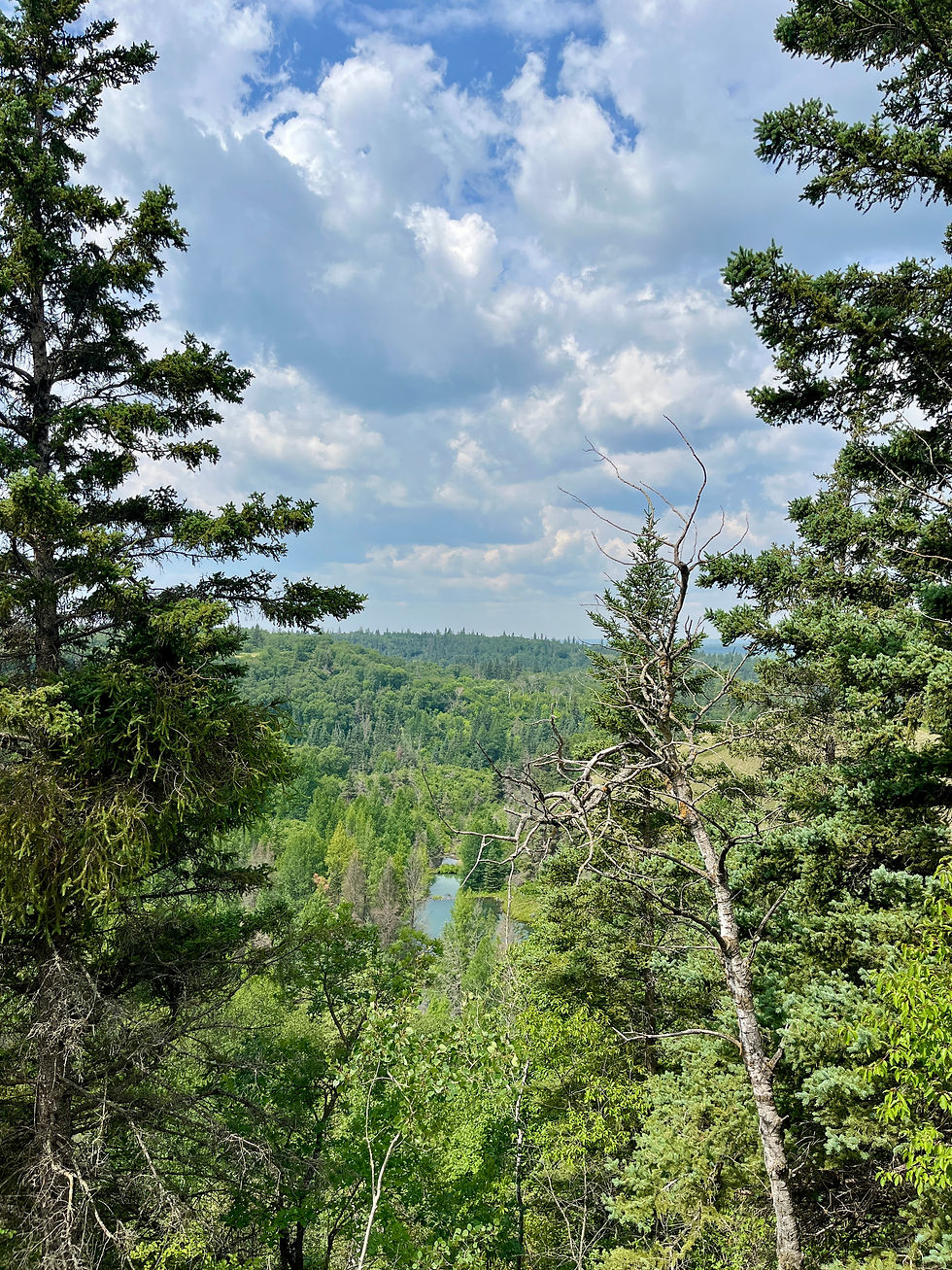
With plant growth stimulated by the recent moisture and long days, the summer environment is bustling with activity.
With the summer season in the Ojibwe territories was hard work. Gathering and distribution of supplies in preparation for the colder seasons happened during this period, with many notable gatherings and events happening in Ojibwe culture. The traditional sundances were a time of many sub-tribal groups gathering and making sure everyone had the supplies they needed, reconnecting with community, as well as other spiritual purposes. Likewise, the Grassdance society held competitions of endurance and dancing, mimicking and teaching about the role of prairie ecosystems.
Gathering of plants and animals was precise - with environmental cycles being much more reliable than today. The Ojibwe knew when, where, and how much to gather of plants that would be ready for a specific use at a specific time. Dave recalls how his grandmother, a central figure to the traditional community who was in charge of medicines, would take him picking plants through the night due to the short window of environmental conditions.
Later in the summer, groups would identify the resources they still needed for the winter season. Whatever items were in short supply were sought after by sub-tribal trading groups. With a strong understanding of nutrition and health, all bases for a healthy winter diet were covered. Likewise, there was a focus on big game animal hunting and trading, as animal fats were a key preservative for the winter.
The Summer-Fall Season
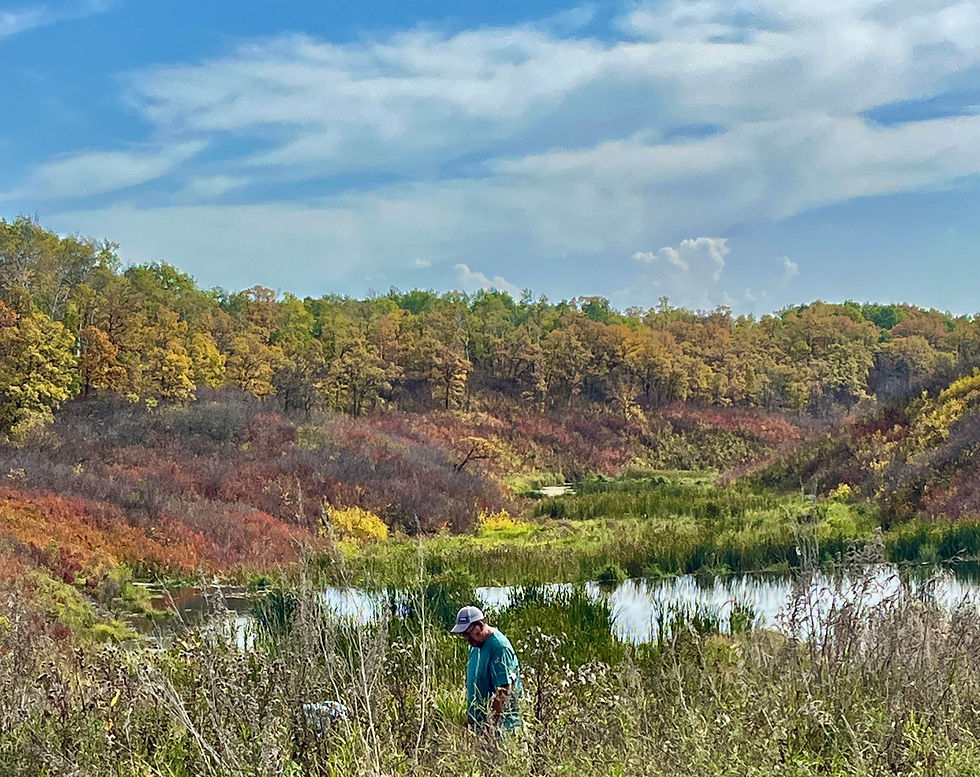
The season between summer and fall required close attention to weather patterns.
With many food sources gathered through the summer, this season was a time of preparing items for long term storage in accordance with the weather conditions. Frost and temperatures dictated what could be stored in the ground, while moisture and the stages of plant dormancy influenced the gathering of roots and planting of trees.
With cold weather around the corner, winter camp planning began. Sub-tribal and family groups very rarely returned to the same camp as the previous year to reduce the strain on the local ecosystem. In this way, Ojibwe people fed into the disturbance-restoration cycles that are natural to the environment, all while closely watching it to make sure nothing fell out of balance.

The Fall-Winter Season
The last of the leaves fall to the ground, signaling the need to settle into winter camps.
During this short season, winter camps underwent their final preparations, with food being stored at these sites.
Bird meats were a focus of the fall-winter season. Species like grouse, prairie chickens, and partridges were in their fall rut and beginning to fatten. These were hunted in small amounts to ensure their populations expanded. Likewise, winter and snow birds were sought after.
The Winter Season
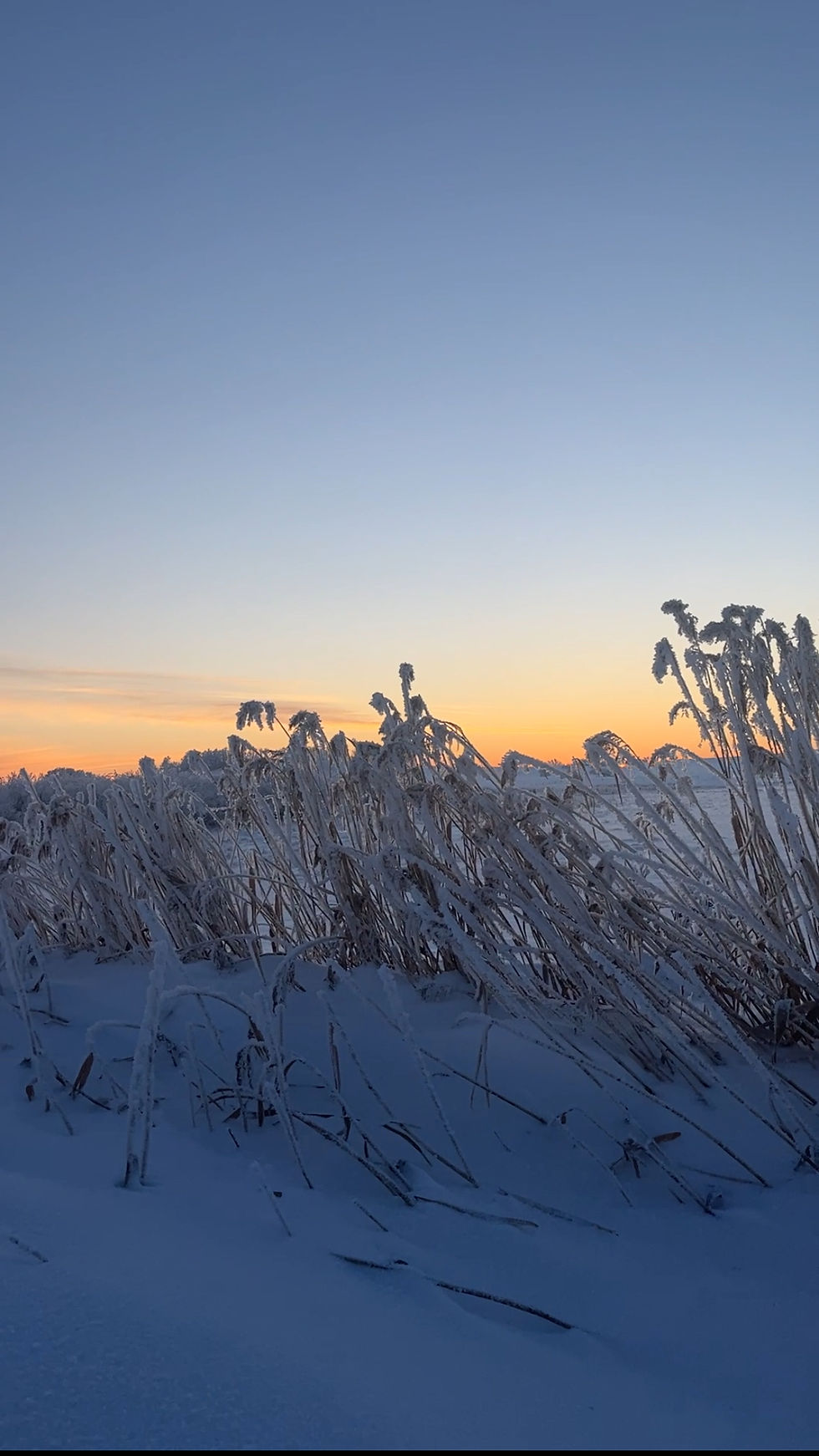
Typically, the winter season lasted for 3 months, with hunting and gathering activities slowing and groups resting in their camps. Food that was stored in various areas was used when needed, such as fish that was moved from creeks into ponds during the fall that could be accessed later, or underground stores of plants and meat. Hides were processed, tools were made from bones, nets were woven, and minor hunting and trapping activities continued.
These were important times for generational knowledge transfer, as the old people of the camp taught through stories and hands-on activities. Likewise, keeping up an up-to-date knowledge base of the landscape and weather patterns was necessary for keeping the camp prepared for the different types of storms.
With that, the yearly cycle of life changing with the environment continued, coming and going with the moving patterns of nature.

A Conversation With Dave Scott - Life With the Environment As the Climate Changes
Living with the environment as the Ojibwe did wasn't easy or straightforward. In nature, hundreds of factors are at play, all of them adding to the picture of survival and thriving on the prairies. As each of these seasons came and went, the cycles that moved with them could fluctuate greatly - one year might have many pollinators and blooming plants, others might bring heavy storms that bring moisture to the landscape and grow fungi in the forests.
For Dave, having grown up with this lifestyle in the environment, the words of his teachers who understood what happens when we live separate from nature carry many warnings:
"Expectation was valuable. We need each and every one of those seasons and the weather that came with them. The processes of nature were nurtured by us and in turn protected us - like snow on the lake that protected the water, and we expected it to do that. Lots of water means thicker ice, which needs more protection, which is why we measure the snow on the ice. That kind of thing. The old people used to go along and chip the ice in rows so that the snow would cover the ice and blanket it. There was a certain time of year where you did that. That's those year-round preparations. Up until the 1960s they did that here [in Swan Lake]. Some of our neighbors would say things like "Here goes those Indians on the ice again". "
The Ojibwe understood how things like the blanketing of snow impacted the health of smaller plants, which in turn protected water in the ground, created healthy communities to support large trees like oaks, who release copious amounts of water into the air and brought the rains that all life depended on. Every small factor supports a larger picture of environmental stability and abundance with humans playing an important role.
Reading the weather patterns served many purposes. While it allowed camps to prepare for a variety of weather conditions, understanding things like moisture movement in the air and sky told a story about the landscape.
"We made a difference between all kinds of weather. In English, the word "storm" is binary, while we have many words that meant many different things. Ice is falling, the winds are warm, that kind of thing."
"I remember being excited for the southern storms as a kid. We weren't scared of them, we played outside during those rains. The thunder and lightning going back and forth was valued and cherished, like the clouds were saying "Everything is ok! Your plants that are just waking up are going to be happy and healthy." Now we are scared of storms. The way they are acting is a warning about what we are doing to the environment."
For some of the younger generations in SLFN who were raised around traditional community members have a sense for what's coming based on what is happening in nature. Years of being out in the environment, raised around traditional values, and seeing the weather change over time all played a role. Dave notes:
"A lot of these young guys who've spent time in the environment have a sense of what's coming based on what is happening in nature. It's almost like a memory when you sense things like that, you've seen it before and your mind knows what's going to come after that.
That's what we all used to do, look at the environment from many different angles and understand what was to come. Way back in the winter, that's what Makwam would do. He would look at the land and do things like taste the snow. You could get all sorts of information from things like how fast it melts in your mouth. When it crystalized, it would melt differently."
For Dave, the winter landscape is very much alive.
"In the winter, the earth rests, but it is still alive. Roots do lots in the winter, they actually start to move things like water, soil, and rocks. Asin - stone - has that same element of life to it for us. It has a purpose in the ecosystem. Stones to us are alive and tied to water - they're moved by water, change how it flows, add minerals, that kind of thing. They can travel a long ways working with other things."
The way these subjects flow from one to another is characteristic of this world view. For a traditional Ojibwe, nothing in the environment is in isolation, and everything is alive and serves a purpose. Although stones won't fall into the "alive" category of western science, they play a huge role in Ojibwe environmental management, especially for waterways. They can travel for miles working with other things, picking up different chemicals and plants and insects, all things that bring life to new places. Different rocks carried different sets of minerals that would be deposited into a lake. Large, dark stones placed in a pond can create warmer microecosystems. Stones and gravel in a creek create riffles in the currents, adding oxygen content to the water. These were all factors the Ojibwe people understood when managing water in all seasons.
"People managed water by putting bones or stones in waterways. These people looked after human and animal water consumption, making sure the water was clean. For us, water is medicine. Sometimes, the old healers would contain certain waters with certain plants growing in them to heal people. You had to consider many things for people to survive. For a shortage of calcium for example, they used to boil bones to help with that, though we didn't have a word for a vitamin like that. Temperature of water and what types of animal bones you used and what it ate were all factors."
Muskrats are an important creature for Ojibwe culture. Their presence in a waterway means the water is clean, as well as all the plants they need are there.
"My grandma used to pull out the bone marrow from duck bones for nutrition. Big animals such as beavers were also very valuable for their bones, especially muskrats since they eat so many medicinal plants. Our word for muskrat implied that they were in waters that were safe - the plants they ate weren't contaminated in today's terms. "
Dave's Concerns
In all Dave's life of working with the environment, he has witnessed many things that he grew up knowing disappear. He's watched many species of birds, moths, flowers, trees, insects, mushrooms, reptiles, and other things big and small disappear from much of Manitoba.
For him, most people do not understand the danger we are in:
"People don't understand that we can't survive if we damage the environment. We keep pretending that we will fix it with some chemical. Western science only looks at one single thing like that and doesn't look at the long term effects if the environment is out of balance. All these words and teachings I have talked about, about snow, storms, water, were created from an observation that meant survival and helped us thrive. "
"There's a far bigger thing about growing things in straight lines - it's about disrespect to natural life. It's like moving an invasive plant into an area, we didn't know what those plants were going to do. They are bringing in diseases, so what else are they bringing in? It's all part of that. To us that was like imprisoning a plant. The way we view it, a plant that is imprisoned does not provide good nutrition. That's why the new peoples arriving here growing things in straight lines freaked us out. "
Even the way trees grow is different due to the way storms have become stronger, a clear sign that weather is changing faster than plants can adjust.
"I sit now in my house and look at the small amount of bushes nearby and know that there is trouble there. These guys are hanging on, but they are not spreading or flourishing. That's what a plant does, it propagates as western people say. Trees that are not well sheltered do not grow branches the way other trees grow branches. They need communities around them. I looked at an oak tree once, all of those branches pointed south, the big branches anyway. I asked my gwimeh (teacher) why that tree did that. He said that "the storms from the north are stronger, and it doesn't have enough community around it." We're seeing more and more of that - the stormy side of trees are not surviving very well. The tops of trees aren't surviving. The branches aren't as strong anymore."
"I remember storms when they used to come in - you used to see lots of little broken branches, but you didn't see the strong ones down. Now it's not like that. They don't have their community to support them."
Ojibwe life meant watching and managing all those things. For example, if you saw a tree struggling in the last season, you moved it or moved other supporting trees and plants to help it. As Dave says:
"That's why we moved plants around. It wasn't because we were bored. We believed in these communities of plants and animals. They needed each other to survive. That's why you see spruce groves, oak groves, poplar groves, they needed each other and all their companion plants to survive. Now you will see oak trees killing off their babies. A mature oak grove will have no new saplings coming to replace the old trees, the mother tree always has to try and survive. It's scary for someone like me to see."
Too many things on the landscape prevent these necessary places for our health and food systems from being healthy. Naturally, the trees and bluffs spread and fluctuate and require space to do so. Necessary species like birds or beavers don't fit into these places anymore, and so the trees suffer. Likewise, when we cut borders near forests, there is no transition between a tilled field and old growth forest. This takes away the protection big trees need.
While many of our natural areas have been removed, people don't realize the need for these spaces and what we lose when they're gone. For some, poplar bluffs are flood protection. For other, oak trees hold back dangerous winds. We all rely on grasslands and forests to protect groundwater.
"Look at these domestic trees people bring in - they don't spread. Native trees want to spread, give them a safe place to raise their babies and they will grow. But we don't have that now. Too many things interfere, and it's all because of people - roads, fields, yards."
"My grandfather, my 108 year old grandfather, I asked him about oak trees, just being a little 5 year old kid: why does that tree have really ugly skin (in ojibwe). He said "watch that tree, it will talk to you, it grows, every day in some way." Boy ever since I have paid attention to what these oak trees are saying. "
"A poplar tree you can grow in a pot of soup. I like them too, but I keep a close eye on oaks. If I walked by these trees without caring I wouldn't see these things. That's how people live now, they say they don't pay attention, but they don't care that the tree is contributing to the air they breath, the food they grow. We've forgotten about that stuff. "
"One day, I sat waiting for an oak tree to talk to me. I didn't realize what my grandfather meant by the tree talking to me - committing to that tree, paying attention to what it was doing and what it provided for us. I realized then that if it weakens, I will weaken."


Comments